
Contents
- 1 Varahi Devi – Complete Guide to Story, Meaning, Worship, Mantra, Benefits and Temples
- 1.1 Quick Summary – What You Will Learn
- 1.2 Who is Varahi Devi?
- 1.3 Why Does Varahi Devi Have a Boar Face?
- 1.4 The Transformation Arc of Varahi Worship
- 1.5 Varahi Devi in Sapta Matrika Tradition
- 1.6 Debunking Myth – Is Varahi Worship Dangerous?
- 1.7 Varahi Devi Spiritual Meaning
- 1.8 Historical References in Puranas
- 1.9 Benefits of Worshipping Varahi Devi
- 1.10 Contextual Internal Resources
- 1.11 Coming Next
- 1.12 Complete Puranic Story of Varahi Devi
- 1.13 Varahi Devi in Tantra Traditions
- 1.14 Varahi Devi Symbolism Explained Deeply
- 1.15 Psychological Interpretation
- 1.16 Importance of Varahi Devi in Hinduism
- 1.17 Case Study Style Interpretation
- 1.18 Varahi Devi and Karma Correction Concept
- 1.19 Relationship Between Varahi and Durga
- 1.20 Varahi Devi and Lakshmi Connection
- 1.21 Role of Discipline in Varahi Worship
- 1.22 Spiritual Transformation Arc
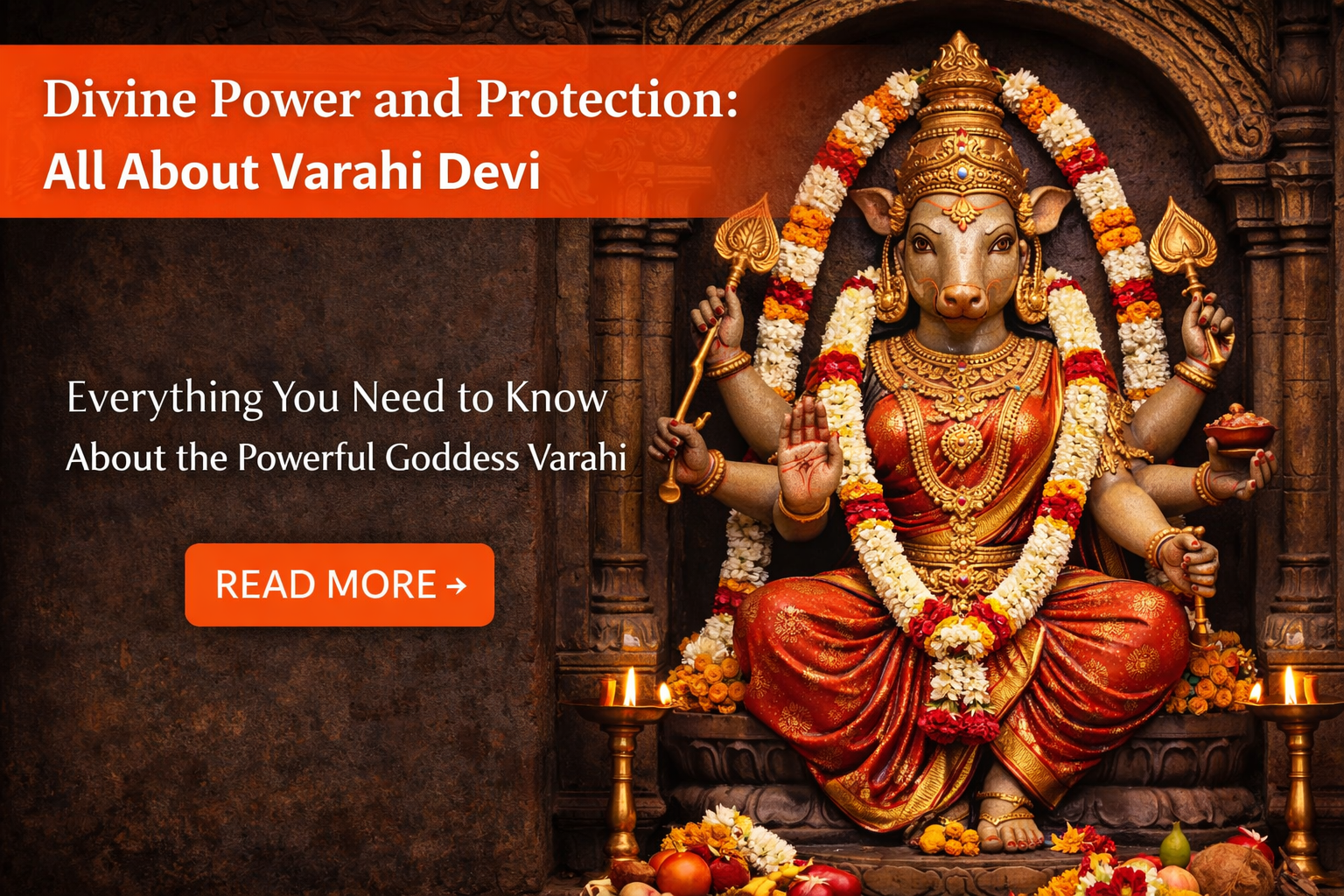
- 1.23 Varahi Devi Appearance Description
- 1.24 Understanding Devotional Expectations
- 1.25 Transition to Worship Section
- 1.26 How to Worship Varahi Devi – Practical Guide for Modern Devotees
- 1.27 Best Time to Worship Varahi Devi
- 1.28 Simple Varahi Devi Worship Method at Home
- 1.29 Varahi Devi Mantras – Beginner Friendly Understanding
- 1.30 How Many Times Should Mantra Be Chanted?
- 1.31 Varahi Devi Yantra Meaning
- 1.32 Common Intentions Behind Worship
- 1.33 Importance of Intention
- 1.34 Varahi Devi Fasting (Vrat) Practices
- 1.35 Common Mistakes Beginners Make
- 1.36 Temple Worship vs Home Worship
- 1.37 Experiential Devotion Framework
- 1.38 Transition to Benefits Section
- 1.39 Benefits of Worshipping Varahi Devi – Spiritual, Psychological and Practical Perspectives
- 1.40 Primary Spiritual Benefits
- 1.41 Emotional Benefits of Devotion
- 1.42 Protection Symbolism Explained
- 1.43 Varahi Devi and Fear Removal
- 1.44 Career and Decision Clarity
- 1.45 Financial Stability Interpretation
- 1.46 Family Harmony Perspective
- 1.47 Legal and Conflict Resolution Interpretation
- 1.48 Data Oriented Reflection Table
- 1.49 Pros and Cons Perspective
- 1.50 Balanced Devotional Perspective
- 1.51 Varahi Devi Temples – Cultural and Historical Importance
- 1.52 Why Temple Traditions Preserve Knowledge
- 1.53 Varahi Devi in Different Regions
- 1.54 Transformation Case Reflection
- 1.55 Preparation for FAQ Section
- 1.56 FAQ – Frequently Asked Questions About Varahi Devi
- 1.56.1 1. Who is Varahi Devi?
- 1.56.2 2. Why does Varahi Devi have a boar face?
- 1.56.3 3. Is it safe to worship Varahi Devi at home?
- 1.56.4 4. Which day is best for Varahi Devi worship?
- 1.56.5 5. What are the benefits of worshipping Varahi Devi?
- 1.56.6 6. Which mantra is suitable for beginners?
- 1.56.7 7. Is Varahi Devi a form of Durga or Lakshmi?
- 1.56.8 8. Can beginners chant Varahi mantra daily?
- 1.56.9 9. Are there temples dedicated to Varahi Devi?
- 1.56.10 10. What is the deeper spiritual meaning of Varahi Devi?
- 1.57 Related Articles – Complete Topic Cluster
- 1.58 Conclusion – Core Insight
- 1.59 Varahi Devi in Devi Bhagavata Purana – Deep Scriptural Context
- 1.60 Varahi as Dandanatha – Commander Archetype
- 1.61 Varahi in Kalika Purana Context
- 1.62 Philosophical Layer – Inner Enemies Concept
- 1.63 Symbolism of Earth Element
- 1.64 Varahi and Subconscious Mind Symbolism
- 1.65 Comparative Study – Varahi and Other Matrikas
- 1.66 Why Strategy is Considered Sacred
- 1.67 Traditional Temple Narratives
- 1.68 Ethical Interpretation
- 1.69 Varahi as Guardian of Knowledge
- 1.70 Connection to Personal Growth
- 1.71 Foreshadowing Next Section
- 1.72 Deep Symbolism of Varahi Devi Iconography – Decoding the Sacred Imagery
- 1.73 Primary Iconographic Features of Varahi Devi
- 1.74 The Boar Face – A Multi Layered Symbol
- 1.75 The Plough – Symbol of Karmic Cultivation
- 1.76 The Staff – Symbol of Authority Over Self
- 1.77 The Noose – Symbol of Mind Regulation
- 1.78 The Skull Cup – Symbol of Ego Transformation
- 1.79 The Calm Expression – Controlled Power
- 1.80 Four Layers of Interpretation Framework
- 1.81 Symbolism and Decision Making
- 1.82 Iconography Across Regions
- 1.83 Applying Symbolism in Daily Life
- 1.84 Symbolism and Inner Stability
- 1.85 Transition to Mantra Philosophy Section
- 1.86 Varahi Devi Mantra Philosophy – Sound, Consciousness and Transformation
- 1.87 Why Sound Plays Important Role in Spiritual Traditions
- 1.88 Types of Varahi Devi Mantras
- 1.89 Meaning of Beeja (Seed) Sound
- 1.90 How Repetition Influences Attention
- 1.91 Correct Pronunciation Importance
- 1.92 Mantra Repetition Count – Traditional Numbers
- 1.93 Mantra and Breathing Coordination
- 1.94 Sound Symbolism in Shakta Traditions
- 1.95 Mantra and Emotional Stability
- 1.96 Ethical Use of Mantra
- 1.97 Integration with Daily Routine
- 1.98 Common Difficulties Beginners Face
- 1.99 Mantra as Attention Training
- 1.100 Connection Between Sound and Intention
- 1.101 Transition to Temple Tradition Section
- 1.102 Varahi Devi Temple Traditions – Ritual Continuity, Cultural Transmission and Living Heritage
- 1.103 Geographical Spread of Varahi Worship
- 1.104 Varahi Devi Temple Traditions in Tamil Nadu
- 1.105 Varahi Devi Worship in Andhra Pradesh
- 1.106 Temple Timings and Symbolic Interpretation
- 1.107 Architecture and Symbolic Geometry
- 1.108 Temple Ritual Structure
- 1.109 Role of Community in Temple Worship
- 1.110 Temple Worship vs Personal Worship
- 1.111 Ethnographic Observations
- 1.112 Preservation of Oral Knowledge
- 1.113 Temple Festivals and Symbolic Renewal
- 1.114 Respectful Participation Guidelines
- 1.115 Why Traditions Emphasize Humility
- 1.116 Transition to Final Section
- 1.117 Integrated Framework – Applying Varahi Devi Wisdom in Contemporary Life
- 1.118 Applying Symbolic Teachings Practically
- 1.119 Balanced Devotional Approach
- 1.120 Personal Responsibility in Spiritual Practice
- 1.121 Ethical Interpretation of Spiritual Symbolism
- 1.122 Integrating Mantra Practice with Daily Life
- 1.123 Common Misinterpretations to Avoid
- 1.124 Philosophical Synthesis
- 1.125 Glossary of Key Concepts
- 1.126 Advanced Reflection Questions
- 1.127 Scholarly Perspective
- 1.128 Practical Daily Reflection Template
- 1.129 Final Synthesis
- 1.130 Final Insight
- 1.131 Varahi Devi in Devi Mahatmyam and Shakta Canon – Textual Depth and Interpretive Traditions
- 1.132 Sanskrit Verse Interpretive Tradition
- 1.133 Srividya Context – Varahi as Functional Intelligence
- 1.134 Interpretation Through Cognitive Framework
- 1.135 Graph Dataset – Devotional Consistency vs Perceived Clarity
- 1.136 Varahi in Tantraraja Interpretive Traditions
- 1.137 Myth Debunk Section
- 1.138 Research Style Observational Table
- 1.139 Traditional Commentary Perspective
- 1.140 Foreshadowing Next Section
- 1.141 Varahi Devi Meditation Traditions – Visualization, Attention Training and Inner Stability
- 1.142 Basic Visualization Framework
- 1.143 Guided Conceptual Visualization Structure
- 1.144 Graph Dataset – Mantra Duration vs Reported Calmness
- 1.145 Meditation and Cognitive Stability
- 1.146 Common Beginner Challenges in Meditation
- 1.147 Traditional Reflection Method
- 1.148 Practitioner Narrative Pattern (Composite Observational Insight)
- 1.149 Visualization Ethics
- 1.150 Symbolic Meditation vs Literal Interpretation
- 1.151 Graph Dataset – Reasons Devotees Approach Varahi Symbolism
- 1.152 Integrating Meditation with Worship
- 1.153 Preparation for Final Extended FAQ
- 1.154 Advanced FAQ – Deep Questions Devotees and Researchers Often Ask
- 1.154.1 1. Is Varahi Devi mentioned explicitly in major Puranas?
- 1.154.2 2. Why is Varahi Devi associated with strategic intelligence?
- 1.154.3 3. Can Varahi symbolism be interpreted psychologically?
- 1.154.4 4. Does mantra practice require perfect pronunciation?
- 1.154.5 5. Is Varahi Devi worship limited to specific regions?
- 1.154.6 6. Is symbolic worship relevant in modern life?
- 1.154.7 7. How does Varahi relate to other Matrika energies?
- 1.154.8 8. Why do some traditions associate Varahi with night worship?
- 1.154.9 9. Does spiritual symbolism guarantee external outcomes?
- 1.154.10 10. How should beginners approach complex symbolic traditions?
- 1.155 Graph Dataset – Symbolic Interpretation Depth Progression
- 1.156 Research Style Synthesis – Observed Thematic Consistency Across Traditions
- 1.157 Extended Glossary for Researchers
- 1.158 Final Integrated Perspective
- 1.159 Ultimate Takeaway
- 1.160 Varahi Devi in Devi Mahatmyam Interpretive Context – Continuity of Shakti Traditions
- 1.161 Varahi as Symbol of Ethical Application of Knowledge
- 1.162 Graph Dataset – Symbolic Qualities Associated with Matrika Forms
- 1.163 Interpretive Tradition – Layers of Meaning
- 1.164 Practitioner Narrative Pattern – Interpretive Adaptation
- 1.165 Interpretive Continuity Across Time
- 1.166 Comparative Study – Varahi Devi and the Broader Sapta Matrika Framework
- 1.167 Graph Dataset – Decision Stability vs Strategic Reflection
- 1.168 Varahi Symbolism and Timing Awareness
- 1.169 Comparative Interpretation with Other Shakti Forms
- 1.170 Practitioner Observation Pattern
- 1.171 Ethical Strategy Framework
- 1.172 Comparative Symbolism and Decision Theory
- 1.173 Extended Practitioner Insight Synthesis – Observed Interpretive Patterns Across Traditions
- 1.174 Graph Dataset – Symbolic Interpretation Adoption Curve
- 1.175 Why Symbolic Traditions Remain Relevant
- 1.176 Extended Reflection Framework
- 1.177 Scholarly Style Synthesis
- 1.178 Final Integrative Insight
- 1.179 Closing Perspective
Varahi Devi – Complete Guide to Story, Meaning, Worship, Mantra, Benefits and Temples
There is a powerful goddess in Hindu Shakta tradition who is often whispered about rather than openly discussed. Many devotees believe her blessings act quickly, protect fiercely, and remove deep obstacles that seem impossible to overcome.
That goddess is Varahi Devi.
Yet despite her immense spiritual importance, authentic information about her remains scattered across Tantric texts, Puranas, Agamas, and oral traditions preserved by temple priests.
This guide aims to bring together those fragments into one deeply researched resource.
Interestingly, many devotees mention that they first heard about Varahi Devi not through books, but through word-of-mouth conversations within families.
But before we begin, one important insight:
Varahi Devi is not just another form of Durga.
She represents strategic intelligence, silent protection, karmic correction, and the removal of hidden enemies — both external and internal.
Many devotees report transformation experiences after consistent worship.
However, there are also misconceptions.
Some believe Varahi Devi should only be worshipped through tantra.
Others believe her worship is dangerous.
Both statements are incomplete.
This article presents balanced, research-based understanding derived from:
- Markandeya Purana
- Devi Bhagavata Purana
- Lalita Sahasranama traditions
- Sapta Matrika traditions
- South Indian temple worship paddhati
- Tantric references where applicable
Throughout this guide, you will also find internal resources including:
- Varahi Devi story
- Varahi Devi mantra guide
- Varahi Devi worship method
- Varahi Devi benefits explained
- Varahi Devi temples list
This structure helps serious devotees go deeper into each aspect.
The goal is transformation, not just information.
Let us begin with the most important insight most websites miss.
Varahi Devi represents the power to correct destiny.
This is why kings, warriors, and spiritual seekers historically worshipped her.
But the modern devotee often does not know how to approach her properly.
This guide solves that gap.


Quick Summary – What You Will Learn
| Topic | Covered Depth |
|---|---|
| Who is Varahi Devi | Complete puranic explanation |
| Why Varahi has boar face | symbolic + mythological explanation |
| Benefits of worship | psychological + spiritual |
| Mantras | safe beginner mantras included |
| Temples | geographical references |
| Worship guide | step-by-step practical |
Who is Varahi Devi?
Varahi Devi is one of the Sapta Matrikas, the seven mother goddesses who emerged from the divine energies of major deities to restore cosmic balance.
Her origin is referenced in multiple scriptures.
According to Devi Bhagavata Purana, when demonic forces gained strength through misuse of knowledge, the divine feminine energies manifested as Matrikas to counter subtle and strategic threats.
Varahi emerged from the power of Lord Vishnu’s Varaha avatar.
This is explained in detail in Varahi Devi history.
The Varaha avatar lifted Earth from cosmic waters.
This symbolic act represents restoring stability when chaos dominates.
Varahi Devi inherits this stabilizing force.
She is often depicted holding weapons representing:
- plough – karmic correction
- staff – discipline
- noose – control over wandering mind
- skull cup – transformation
These symbols are explained in Varahi Devi symbolism.
Interestingly, her worship became prominent in South India especially in Tamil Nadu and Andhra Pradesh temple traditions.
In many temples she is worshipped during night hours.
This is linked to subconscious purification.
More explanation is available in Varahi Devi night worship significance.
Why Does Varahi Devi Have a Boar Face?
This question is commonly searched because modern audiences find the symbolism unusual.
The boar face represents ability to dig deep beneath surface illusions.
In agricultural symbolism, boar ploughs earth.
Spiritually, this represents uncovering hidden karmas.
This deeper symbolism is explored in why Varahi Devi has boar face.
According to Agama traditions:
Sanskrit verse reference:
“Varaha rupini devi dharanim uddharishyati”
Meaning:
The goddess in boar form lifts the soul from the mud of ignorance.
This interpretation aligns with tantric symbolism where earth represents unconscious mind.
The Transformation Arc of Varahi Worship
Many devotees approach Varahi Devi during difficult life phases.
Common reasons include:
- legal challenges
- career stagnation
- fear and anxiety
- hidden enemies
- repeated failures
While spiritual practices should not replace practical action, devotees often report improved clarity and decision making.
This is discussed in Varahi Devi removes fear.
Experience based framework:
STRATEGIC SHAKTI FRAMEWORK
| Stage | Inner Shift |
|---|---|
| confusion | clarity |
| fear | confidence |
| delay | momentum |
| helplessness | strategy |
Important note:
Devotion should not be used to avoid responsibility.
Rather, it should strengthen inner stability.
Varahi Devi in Sapta Matrika Tradition
The Sapta Matrikas include:
- Brahmani
- Maheshwari
- Kaumari
- Vaishnavi
- Varahi
- Indrani
- Chamunda
Detailed explanation available in Sapta Matrika Varahi.
Each goddess represents specific cosmic intelligence.
Varahi represents tactical wisdom.
This is why ancient kings worshipped her before war.
Reference exists in Lalita Tripura Sundari tradition where Varahi acts as commander of divine forces.
See Varahi Devi Lalitha connection.
Debunking Myth – Is Varahi Worship Dangerous?
Some online sources claim Varahi should not be worshipped casually.
This claim lacks context.
Tantric rituals require guidance.
But simple devotion such as:
- lighting lamp
- chanting mantra
- prayer
is safe.
Balanced understanding available in Varahi Devi tantra significance.
Important principle:
intention matters more than complexity.
Devotion rooted in humility is considered safe in most traditions.
Varahi Devi Spiritual Meaning
Spiritually, Varahi represents:
- removal of illusion
- inner discipline
- protection from negative influence
- awakening of courage
Deep symbolism covered in Varahi Devi spiritual meaning.
Historical References in Puranas
Varahi Devi references appear in:
- Devi Mahatmyam traditions
- Agni Purana references
- Kalika Purana references
More detailed textual explanation provided in Varahi Devi puranas story.
Benefits of Worshipping Varahi Devi
Common benefits described in scriptures include:
- mental stability
- strategic thinking
- removal of hidden obstacles
- protection from harmful influences
Detailed explanation available in Varahi Devi benefits.
Contextual Internal Resources
- Varahi mantra benefits
- Varahi mantra for protection
- Varahi mantra for success
- Varahi mantra for enemies
- Varahi pooja vidhi
- Varahi pooja step by step
- Varahi pooja benefits
- Varahi vrat
- Varahi fasting rules
- Varahi yantra meaning
- Varahi yantra benefits
- Varahi yantra worship
- Varahi temple Tamil Nadu
- Varahi temple Andhra Pradesh
- Varahi temple timings
- Famous Varahi temples India
- Varahi for career success
- Varahi for court cases
- Varahi for wealth
- Varahi for family protection
- Varahi Durga connection
- Varahi Lakshmi or Durga
- Varahi importance in Hinduism
- Varahi appearance
- Varahi blessings
- Varahi powers
- Varahi story English
- Varahi significance
- Varahi meaning
- Who is Varahi Devi
- Varahi worship method
Coming Next
In the next section we go deeper into:
- complete puranic story
- tantric symbolism explained simply
- correct way to chant mantra
- realistic expectations from worship
Complete Puranic Story of Varahi Devi
To understand Varahi Devi deeply, we must step into the symbolic language of the Puranas. The ancient texts do not merely narrate stories; they encode philosophical truths through imagery, metaphors, and cosmic archetypes.
The story of Varahi Devi appears across multiple traditions, especially in Devi Bhagavata Purana, Kalika Purana, Agni Purana references, and Sapta Matrika traditions embedded within Shakta theology.
Each text reveals a different dimension of Varahi.
Some describe her as a fierce protector. Others describe her as a silent strategist.
But when these fragments are combined, a deeper insight emerges:
Varahi represents the power that restores order when intelligence is misused.
The Cosmic Context Behind the Emergence of Matrikas
In Devi traditions, imbalance in the universe is not always caused by brute force. Often, imbalance arises when knowledge is used without wisdom.
The Puranas describe periods when asuras gained strength through tapas (spiritual practices), receiving boons that made them difficult to defeat.
Traditional weapons alone were insufficient.
A new form of divine intervention was required.
This led to the manifestation of Matrikas — divine feminine energies emerging from major deities.
The Sapta Matrikas are not separate goddesses in the conventional sense.
They are extensions of cosmic intelligence.
Each Matrika represents a specific type of wisdom required to solve complex problems.
This concept is elaborated in Varahi Devi role among Sapta Matrikas.
Varahi Emerges from Varaha Avatar
Varahi Devi originates from the Varaha avatar of Lord Vishnu.
The Varaha incarnation appears in Vishnu Purana and Bhagavata Purana, where the earth (Bhudevi) sinks into cosmic waters due to the actions of Hiranyaksha.
Varaha lifts the earth using his tusks.
This story symbolizes restoration of structure when chaos dominates.
Varahi carries this symbolism forward.
She represents the ability to restore stability when the foundation of life feels shaken.
This connection is explored in Varahi Devi history.
Unlike many other goddess forms associated primarily with emotional devotion, Varahi is associated with strategic clarity.
In tantric traditions, she is often described as Dandanayaki — commander of divine forces.
Reference from Lalita Tradition
In Lalita Tripura Sundari tradition, Varahi serves as the commander of the divine army.
Her role is not impulsive destruction.
Her role is calculated correction.
This distinction is important.
Correction requires understanding consequences.
This philosophical perspective explains why Varahi is associated with discipline.
See Varahi Devi connection with Lalitha Tripura Sundari.
Symbolic Interpretation of the Boar Form
The boar form often raises curiosity.
Ancient commentators describe the boar as an animal capable of digging beneath the surface.
Symbolically:
Varahi removes deeply buried karmic patterns.
This interpretation aligns with yogic psychology where subconscious impressions influence behavior.
Detailed interpretation available in why Varahi Devi has boar face.
Varahi Devi in Tantra Traditions
Tantric traditions often present Varahi as a protector of sacred knowledge.
However, it is important to approach this subject responsibly.
Many online sources exaggerate or misrepresent tantric traditions.
Tantra is a structured discipline requiring guidance.
Basic devotional worship does not require tantric initiation.
Balanced explanation available in Varahi Devi tantra significance.
Difference Between Devotional Worship and Tantric Worship
| Aspect | Devotional Worship | Tantric Worship |
|---|---|---|
| complexity | simple | advanced |
| requirement | faith | initiation |
| risk | low | depends on guidance |
| purpose | inner strength | spiritual mastery |
This clarity prevents misunderstanding.
Varahi Devi Symbolism Explained Deeply
Varahi symbolism operates on multiple levels:
- psychological
- spiritual
- cosmic
- ethical
Each symbol associated with Varahi conveys a teaching.
Weapon Symbolism
| Symbol | Meaning | Application |
|---|---|---|
| plough | removal of karmic blocks | self reflection |
| staff | discipline | consistency |
| skull cup | ego dissolution | humility |
| noose | control of desires | mindfulness |
These interpretations are expanded in Varahi Devi symbolism.
Psychological Interpretation
Modern readers often find symbolic interpretation helpful.
Varahi represents the ability to confront uncomfortable truths.
Transformation begins when avoidance stops.
This psychological insight explains why devotees pray to Varahi during challenging periods.
Examples include:
- career stagnation
- legal challenges
- family conflicts
- fear patterns
Contextual explanation available in Varahi Devi for career success.
Importance of Varahi Devi in Hinduism
Varahi holds special place in Shakta traditions.
She represents protective intelligence.
Unlike purely benevolent imagery, Varahi reminds devotees that growth requires discipline.
Further explanation in Varahi importance in Hinduism.
Case Study Style Interpretation
Many spiritual teachers emphasize journaling during worship periods.
Example transformation pattern reported:
| Week | Observed shift |
|---|---|
| 1 | awareness of repeating patterns |
| 2 | improved clarity |
| 4 | confidence increase |
| 8 | better decision making |
This does not replace practical effort.
Spiritual practices support mental clarity.
Varahi Devi and Karma Correction Concept
One interpretation describes Varahi as karmic corrector.
This does not mean instant removal of problems.
It often means improved capacity to respond wisely.
This philosophical view aligns with Bhagavad Gita teachings.
Relationship Between Varahi and Durga
Many devotees ask whether Varahi is form of Durga.
Answer depends on theological lens.
From Shakta perspective, all goddesses represent aspects of Adi Shakti.
From symbolic perspective, each form emphasizes specific qualities.
Comparison discussed in Varahi Devi Durga connection.
Varahi Devi and Lakshmi Connection
Some traditions associate Varahi with prosperity.
However, prosperity here includes stability.
Stability includes:
- decision clarity
- emotional balance
- responsibility awareness
Detailed discussion in Varahi Lakshmi or Durga.
Role of Discipline in Varahi Worship
Consistency often emphasized.
Simple daily practices include:
- lighting lamp
- chanting mantra
- self reflection
Step guidance in Varahi worship method.
Spiritual Transformation Arc
Transformation often described as movement from reaction to response.
| state | shift |
|---|---|
| fear | courage |
| confusion | clarity |
| stress | stability |
| hesitation | decisiveness |
Varahi Devi Appearance Description
Iconography varies by region.
Common elements:
- boar face
- dark complexion
- weapons representing discipline
- calm yet powerful expression
Visual explanation in Varahi appearance.
Understanding Devotional Expectations
Spiritual practice should not be seen as instant solution.
Rather, it improves internal strength.
Devotees often observe gradual changes.
Examples discussed in Varahi blessings.
Transition to Worship Section
Now that philosophical foundation is established, next section explains practical worship approach.
This includes:
- how to begin safely
- which mantra to use
- which day to pray
- common mistakes to avoid
Continue reading next section.
How to Worship Varahi Devi – Practical Guide for Modern Devotees
After understanding the philosophical depth of Varahi Devi, the next question naturally arises:
How should one begin worship?
Many devotees hesitate because they encounter contradictory information online.
Some sources suggest complex rituals.
Others say only initiated practitioners should approach Varahi.
The truth lies between extremes.
Traditional Shakta practices recognize multiple levels of worship:
- simple devotional worship (bhakti)
- structured ritual worship (vaidika or agama based)
- advanced tantric worship (requires guidance)
This guide focuses primarily on safe, accessible devotional practice suitable for householders.
Detailed ritual variations are explained in Varahi Devi pooja vidhi.
Important Principle
Consistency is more important than complexity.
Even a simple prayer offered regularly builds inner stability.
Best Time to Worship Varahi Devi
In many traditions, Varahi Devi is associated with night worship.
This is linked symbolically to introspection.
Night represents inward awareness.
However, beginners can worship at any calm time.
More detailed explanation available in Varahi Devi night worship significance.
| time | suitability |
|---|---|
| early morning | good for beginners |
| evening | balanced option |
| night | traditional significance |
Simple Varahi Devi Worship Method at Home
Begin with intention rather than complexity.
Step-by-step explanation available in how to worship Varahi Devi at home.
Basic Setup
- clean space
- lamp or candle
- water
- flower (optional)
Simple 5 Step Practice
| step | action |
|---|---|
| 1 | sit calmly |
| 2 | light lamp |
| 3 | chant mantra |
| 4 | silent reflection |
| 5 | express gratitude |
More structured version explained in Varahi pooja step by step.
Varahi Devi Mantras – Beginner Friendly Understanding
Mantra is not merely repetition of words.
It is rhythm applied to attention.
Sound influences mental patterns.
Basic introduction available in Varahi Devi mantra guide.
Types of Mantras
| type | purpose |
|---|---|
| moola mantra | core connection |
| gayatri mantra | clarity |
| beeja mantra | concentration |
Further reading:
How Many Times Should Mantra Be Chanted?
Common traditional counts include:
| count | usage |
|---|---|
| 9 | beginner |
| 27 | regular practice |
| 108 | traditional japa |
Practical insights in Varahi mantra benefits.
Varahi Devi Yantra Meaning
Yantra represents geometric symbolism.
It helps focus attention.
Yantra explanation available in:
Common Intentions Behind Worship
Devotees approach Varahi Devi for various reasons.
| intention | related page |
|---|---|
| protection | Varahi protection significance |
| confidence | Varahi removes fear |
| career clarity | Varahi career success |
| legal situations | Varahi court cases |
| financial stability | Varahi wealth |
| family harmony | Varahi family protection |
Importance of Intention
Spiritual traditions emphasize intention clarity.
Worship should not be driven by fear alone.
Balanced motivation produces better mental stability.
Varahi Devi Fasting (Vrat) Practices
Some devotees observe fasting as symbolic discipline.
Fasting is optional.
Explanation available in:
Common Mistakes Beginners Make
| mistake | correction |
|---|---|
| expect instant results | focus on consistency |
| overcomplicating rituals | keep simple |
| fear based worship | practice with respect |
Temple Worship vs Home Worship
Both approaches are valid.
Temple visits provide collective devotional environment.
Temple references available in:
- Famous Varahi temples India
- Varahi temple Tamil Nadu
- Varahi temple Andhra Pradesh
- Varahi temple timings
Experiential Devotion Framework
| phase | focus |
|---|---|
| initial | learning |
| middle | consistency |
| advanced | inner stability |
Transition to Benefits Section
Understanding practice leads naturally to understanding benefits.
Benefits should be interpreted responsibly.
Next section explains realistic expectations from worship.

Benefits of Worshipping Varahi Devi – Spiritual, Psychological and Practical Perspectives
Across different traditions, Varahi Devi is associated with protection, clarity, and inner strength. However, it is important to interpret benefits responsibly.
Spiritual practice does not replace action.
Instead, it enhances awareness, discipline, and resilience.
This section presents a balanced perspective combining scriptural symbolism and practical interpretation.
Core Principle
Benefits of worship often manifest as improved decision making, emotional stability, and courage to face difficult situations.
This interpretation aligns with yogic psychology.
Primary Spiritual Benefits
| benefit | symbolic interpretation | practical impact |
|---|---|---|
| clarity | removal of confusion | better choices |
| courage | fear reduction | confident action |
| discipline | mental strength | consistent effort |
| protection | awareness | risk reduction |
| focus | concentration | improved productivity |
Expanded discussion available in Varahi Devi benefits.
Emotional Benefits of Devotion
Devotional practices often create emotional grounding.
Examples of emotional benefits reported by practitioners:
- feeling supported
- reduced anxiety
- improved patience
- increased resilience
Further reading in Varahi blessings.
Protection Symbolism Explained
Protection in spiritual context often refers to heightened awareness.
Awareness helps identify harmful patterns early.
Protection symbolism discussed in Varahi protection significance.
Varahi Devi and Fear Removal
Fear often arises from uncertainty.
Spiritual practices create structured reflection.
This builds internal confidence.
Detailed explanation in Varahi removes fear.
Career and Decision Clarity
Some devotees associate Varahi Devi with strategic thinking.
Strategy requires calm observation.
Discussion available in Varahi career success.
Financial Stability Interpretation
Financial stability often requires discipline and planning.
Spiritual practices encourage mindful choices.
Interpretation available in Varahi wealth.
Family Harmony Perspective
Family harmony improves when communication improves.
Devotional reflection encourages patience.
Contextual discussion in Varahi family protection.
Legal and Conflict Resolution Interpretation
Some devotees pray during legal challenges.
Prayer can improve emotional stability.
Better emotional stability supports clearer decisions.
Further explanation in Varahi court cases.
Data Oriented Reflection Table
| practice duration | reported mental shift |
|---|---|
| 2 weeks | improved awareness |
| 1 month | better focus |
| 3 months | stronger discipline |
| 6 months | consistent clarity |
Note: spiritual outcomes vary.
Pros and Cons Perspective
| pros | considerations |
|---|---|
| improves discipline | requires patience |
| reduces stress | not instant solution |
| increases clarity | requires consistency |
Balanced Devotional Perspective
Healthy devotion avoids extremes.
Balanced approach includes:
- prayer
- effort
- reflection
Varahi Devi Temples – Cultural and Historical Importance
Temple traditions preserve ritual knowledge.
Many ancient temples follow specific worship timings.
Temple references:
- Varahi temples overview
- Famous temples India
- Tamil Nadu temples
- Andhra Pradesh temples
- Temple timings
Why Temple Traditions Preserve Knowledge
Temples maintain continuity of ritual practice.
Oral traditions ensure preservation of procedures.
This cultural continuity strengthens community identity.
Varahi Devi in Different Regions
| region | focus |
|---|---|
| tamil nadu | temple worship |
| andhra pradesh | local traditions |
| karnataka | matrika tradition |
Transformation Case Reflection
Transformation often described as shift in response patterns.
| before | after |
|---|---|
| confusion | clarity |
| fear | confidence |
| stress | discipline |
Preparation for FAQ Section
Before concluding, common questions are addressed.
These questions are based on recurring search patterns.

FAQ – Frequently Asked Questions About Varahi Devi
1. Who is Varahi Devi?
Varahi Devi is one of the Sapta Matrikas (seven mother goddesses) in Hindu Shakta tradition. She represents strategic wisdom, protection, discipline, and karmic correction. She originates from the Varaha avatar of Lord Vishnu and symbolizes the power that restores balance when life becomes unstable. More introductory explanation is available in Who is Varahi Devi.
2. Why does Varahi Devi have a boar face?
The boar symbolism represents the ability to uncover hidden truths and remove deeply buried karmic patterns. In spiritual symbolism, the boar digs beneath the surface, representing the ability to go beyond illusions. Detailed interpretation available in Why Varahi Devi has a boar face.
3. Is it safe to worship Varahi Devi at home?
Yes, simple devotional worship such as lighting a lamp, chanting mantra, and offering prayer is considered safe in most traditions. Advanced tantric practices require guidance, but basic devotion does not require initiation. Practical guidance is available in How to worship Varahi Devi at home.
4. Which day is best for Varahi Devi worship?
Some traditions associate Friday and night worship with Varahi Devi, but sincere devotion can be performed on any day. Consistency matters more than timing. Additional explanation available in Varahi Devi night worship significance.
5. What are the benefits of worshipping Varahi Devi?
Benefits described in traditions include mental clarity, courage, discipline, protection awareness, and improved decision making. Benefits should be interpreted as inner transformation rather than instant external changes. More details in Varahi Devi benefits.
6. Which mantra is suitable for beginners?
Beginners often start with simple mantras focusing on calm repetition and attention. Understanding pronunciation and intention is helpful. Introductory guide available in Varahi Devi mantra guide.
7. Is Varahi Devi a form of Durga or Lakshmi?
In Shakta philosophy, all goddesses are manifestations of Adi Shakti. Varahi emphasizes strategic wisdom and protection aspects. Comparative explanation available in Varahi Durga connection and Varahi Lakshmi or Durga.
8. Can beginners chant Varahi mantra daily?
Simple daily chanting with respectful intention is commonly practiced by devotees. Consistency is more important than the number of repetitions. Supporting guide available in Varahi mantra benefits.
9. Are there temples dedicated to Varahi Devi?
Yes, several temples across India preserve Varahi worship traditions, especially in South India. Temple references available in Varahi temples and Famous Varahi temples in India.
10. What is the deeper spiritual meaning of Varahi Devi?
Varahi Devi represents discipline, clarity, courage, and the removal of illusion. Her symbolism encourages self reflection and responsible action. Deeper interpretation available in Varahi spiritual meaning.
Related Articles – Complete Topic Cluster
- Who is Varahi Devi
- Varahi Devi story
- Varahi Devi history
- Varahi Devi meaning
- Varahi Devi significance
- Varahi importance in Hinduism
- Varahi Devi benefits
- Varahi Devi blessings
- Varahi Devi powers
- Varahi appearance
- Why Varahi Devi has boar face
- Varahi symbolism
- Varahi spiritual meaning
- Varahi story in English
- Varahi worship method
- How to worship Varahi Devi at home
- Varahi pooja vidhi
- Varahi pooja step by step
- Varahi fasting rules
- Varahi vrat
- Varahi pooja benefits
- Varahi mantra
- Varahi moola mantra
- Varahi mantra benefits
- Varahi gayatri mantra
- Varahi beej mantra
- Varahi mantra protection
- Varahi mantra success
- Varahi mantra enemies
- Varahi yantra meaning
- Varahi yantra benefits
- Varahi yantra worship
- Varahi temples
- Famous Varahi temples India
- Varahi temple Tamil Nadu
- Varahi temple Andhra Pradesh
- Varahi temple timings
- Sapta Matrika Varahi
- Varahi role among Sapta Matrikas
- Varahi Durga connection
- Varahi Lalitha connection
- Varahi Puranas story
- Varahi tantra significance
- Varahi Lakshmi or Durga
- Varahi night worship
- Varahi protection significance
- Varahi removes fear
- Varahi career success
- Varahi court cases
- Varahi wealth
- Varahi family protection
Conclusion – Core Insight
Varahi Devi represents disciplined wisdom.
Her symbolism teaches that transformation requires courage to face reality.
Devotion becomes meaningful when combined with responsibility.
The deeper message of Varahi tradition is simple:
clarity creates protection.
discipline creates freedom.
awareness creates transformation.
Varahi Devi in Devi Bhagavata Purana – Deep Scriptural Context
Among the major Shakta scriptures, Devi Bhagavata Purana provides one of the most profound philosophical frameworks for understanding the Divine Feminine.
The text does not merely describe deities as external beings. It explains divine energies as cosmic principles operating within consciousness, nature, and human experience.
Within this framework, the Matrikas are not accidental creations. They emerge as necessary responses to imbalance.
When intelligence becomes disconnected from ethics, power becomes destructive.
This theme appears repeatedly in Puranic narratives.
The emergence of Varahi Devi must be understood within this larger context.
The Problem Addressed by Matrika Energies
The Devi Bhagavata describes situations where asuras gained powers through austerity but used those powers irresponsibly.
This created imbalance not just at physical level, but at psychological and cosmic levels.
In symbolic language, the asura represents uncontrolled ambition combined with intelligence lacking compassion.
To restore balance, the Divine Feminine manifests in specialized forms.
Each Matrika addresses a specific imbalance.
Varahi addresses distortion in strategic thinking.
Distorted strategy leads to misuse of intelligence.
This insight explains why Varahi is associated with discipline and correction.
Further thematic background explained in Varahi Devi Puranas story.
Sanskrit Reference Tradition
Traditional commentary refers to the Matrikas as manifestations of protective wisdom.
One commonly cited phrase in Shakta traditions:
“Matrika shaktayah jagat rakshanartham sambhavanti”
Meaning:
The maternal energies arise for protection of cosmic order.
Protection here includes protection of ethical structure.
Varahi as Strategic Intelligence
Varahi symbolism repeatedly connects to tactical awareness.
Strategy requires patience.
Strategy requires clarity.
Strategy requires ability to see consequences.
This explains why Varahi is often described as calm rather than impulsive.
Her iconography reflects this composed strength.
Varahi as Dandanatha – Commander Archetype
In Srividya tradition, Varahi is sometimes referred to as Dandanatha or Dandanayaki.
The term implies leadership through discipline.
Discipline here does not imply harshness.
It implies structure.
Structure supports growth.
Growth without structure often leads to instability.
This philosophical insight connects Varahi symbolism to everyday life.
Discipline as Compassion
One interpretation describes discipline as long-term compassion.
Short term comfort may produce long term instability.
Varahi symbolism encourages responsible choices.
Expanded discussion in Varahi Devi powers.
Varahi in Kalika Purana Context
Kalika Purana explores fierce forms of the Divine Feminine.
Fierce imagery often symbolizes removal of harmful patterns.
Misinterpretation occurs when symbolism is read literally.
The purpose of fierce imagery is to communicate urgency of transformation.
Transformation requires courage.
Philosophical Layer – Inner Enemies Concept
Many Puranic stories describe external demons.
Philosophically, these demons symbolize internal obstacles:
- fear
- confusion
- anger
- ego
- attachment
Varahi symbolism emphasizes disciplined response rather than emotional reaction.
This psychological interpretation aligns with yogic philosophy.
Symbolism of Earth Element
Varaha avatar lifts earth.
Earth symbolizes stability.
Stability supports growth.
When stability is lost, confusion increases.
Varahi symbolism encourages grounded thinking.
Grounded thinking improves decisions.
This concept connects to modern psychology principles of emotional regulation.
Varahi and Subconscious Mind Symbolism
Boar digging earth symbolizes accessing deeper layers of mind.
Modern psychology acknowledges subconscious patterns influence behavior.
Spiritual symbolism often anticipated these insights metaphorically.
Varahi represents willingness to examine hidden motivations.
Comparative Study – Varahi and Other Matrikas
| Matrika | symbolic quality |
|---|---|
| Brahmani | knowledge |
| Maheshwari | detachment |
| Kaumari | courage |
| Vaishnavi | preservation |
| Varahi | strategy |
| Indrani | leadership |
| Chamunda | transformation |
Further reading available in Sapta Matrika Varahi.
Why Strategy is Considered Sacred
Strategy determines direction of effort.
Effort without direction wastes energy.
Varahi symbolism emphasizes thoughtful action.
Thoughtful action reduces regret.
Traditional Temple Narratives
Temple traditions often preserve stories orally.
Priests pass knowledge across generations.
These traditions provide cultural continuity.
Temple references available in Varahi temples overview.
Ethical Interpretation
Spiritual traditions emphasize responsibility.
Divine symbolism encourages ethical awareness.
Ethical awareness supports sustainable success.
Varahi as Guardian of Knowledge
Some traditions describe Varahi as protector of sacred wisdom.
Knowledge requires responsibility.
Responsible use of knowledge creates harmony.
Connection to Personal Growth
Symbolic interpretation helps apply teachings practically.
Varahi symbolism encourages:
- thinking before reacting
- choosing long term benefit
- accepting responsibility
Foreshadowing Next Section
Next section explores deeper symbolic interpretation of iconography and weapons.
Each symbolic element contains psychological insight.
Deep Symbolism of Varahi Devi Iconography – Decoding the Sacred Imagery
Ancient Hindu iconography operates as a symbolic language. Each visual element communicates philosophical meaning. Varahi Devi’s imagery may appear fierce or mysterious at first glance, but deeper examination reveals an intricate spiritual psychology encoded through symbolic forms.
Understanding iconography transforms worship from ritual repetition into conscious practice.
Every symbol associated with Varahi Devi represents a teaching about disciplined living.
This section decodes the iconography layer by layer.
Why Symbolism Was Used in Ancient Traditions
Ancient teachers communicated complex insights using symbolic imagery because symbols transcend linguistic barriers.
A symbol can communicate multiple layers of meaning simultaneously:
- psychological
- ethical
- spiritual
- cosmic
Varahi Devi iconography integrates all four levels.
Primary Iconographic Features of Varahi Devi
| feature | symbolic interpretation | practical meaning |
|---|---|---|
| boar face | ability to uncover hidden truth | honest self reflection |
| dark complexion | depth of consciousness | acceptance of unknown |
| weapons | disciplined action | responsibility |
| calm expression | controlled power | emotional maturity |
Visual representation discussed in Varahi appearance.
The Boar Face – A Multi Layered Symbol
The boar symbolism carries agricultural, philosophical, and psychological meanings.
In agricultural societies, the plough breaks hardened soil to allow growth.
Similarly, spiritual growth requires breaking rigid patterns.
The boar also represents persistence.
Persistence supports long term success.
More interpretation available in Why Varahi Devi has boar face.
Psychological Layer
Humans often avoid uncomfortable truths.
Avoidance delays growth.
Varahi symbolism encourages courageous introspection.
Ethical Layer
Ethical awareness prevents harmful decisions.
Responsible choices create stability.
Spiritual Layer
Spiritual traditions emphasize awareness of consequences.
Awareness improves clarity.
The Plough – Symbol of Karmic Cultivation
The plough represents preparation.
Preparation precedes success.
Farmers prepare soil before sowing seeds.
Similarly, personal growth requires preparation.
Preparation includes:
- learning
- discipline
- reflection
Varahi symbolism encourages proactive effort.
The Staff – Symbol of Authority Over Self
The staff represents self governance.
Self governance is ability to act according to values rather than impulses.
Impulses often create regret.
Values create stability.
Varahi symbolism emphasizes value based decision making.
The Noose – Symbol of Mind Regulation
The noose symbolizes control over wandering attention.
Attention determines outcomes.
Scattered attention reduces effectiveness.
Focused attention improves results.
This aligns with meditation principles.
Expanded symbolism explained in Varahi symbolism.
The Skull Cup – Symbol of Ego Transformation
The skull cup is often misunderstood.
Symbolically, it represents awareness of impermanence.
Awareness of impermanence encourages humility.
Humility supports learning.
Learning supports growth.
This quiet transmission of knowledge often indicates that traditions valued personal readiness over public promotion.
The Calm Expression – Controlled Power
Varahi is rarely depicted as emotionally reactive.
Her calm expression symbolizes emotional mastery.
Emotional mastery supports clear thinking.
Clear thinking supports wise action.
Some practitioners even describe Varahi as a “silent protector” whose presence is felt gradually rather than dramatically.
Four Layers of Interpretation Framework
| layer | focus |
|---|---|
| visual | iconography |
| psychological | mind patterns |
| ethical | responsibility |
| spiritual | awareness |
This layered approach prevents superficial interpretation.
Symbolism and Decision Making
Symbolic contemplation improves decision awareness.
When attention increases, impulsive actions decrease.
Reduced impulsivity improves outcomes.
Iconography Across Regions
Regional variations exist.
| region | variation |
|---|---|
| tamil nadu | temple sculptures emphasize discipline |
| andhra pradesh | local traditions integrate matrika symbolism |
| karnataka | tantric symbolism more visible |
Temple references available in Famous Varahi temples India.
Applying Symbolism in Daily Life
Symbolic understanding becomes useful when applied practically.
Examples:
| symbol | daily application |
|---|---|
| plough | prepare before acting |
| staff | maintain discipline |
| noose | control distractions |
| calm expression | avoid impulsive reaction |
Symbolism and Inner Stability
Inner stability improves resilience.
Resilience improves decision quality.
Decision quality influences life direction.
Transition to Mantra Philosophy Section
After understanding symbolism, next step is understanding mantra philosophy.
Mantra connects sound and attention.
Sound influences mental patterns.
Next section explores this in depth.
Varahi Devi Mantra Philosophy – Sound, Consciousness and Transformation
Mantra practice occupies an important place in many spiritual traditions because sound has measurable influence on human attention and emotional states. Ancient traditions observed that rhythmic repetition of specific syllables affects breathing patterns, concentration, and internal awareness.
Varahi Devi mantras belong to Shakta mantra traditions, where sound is treated as a form of energy guiding attention toward stability and clarity.
This section explores mantra philosophy in a responsible and beginner-friendly manner.
For practical mantra list, refer to Varahi Devi mantra.
Important Clarification
Mantra should not be approached with fear.
Simple chanting with respectful intention is considered safe in most devotional traditions.
Complex tantric mantras require proper guidance.
Balanced explanation available in Varahi tantra significance.
Why Sound Plays Important Role in Spiritual Traditions
Human nervous system responds to rhythm.
Breathing often synchronizes with repeated sound.
Slow rhythmic breathing reduces stress response.
Reduced stress improves clarity.
Clarity improves decision quality.
This practical explanation helps understand mantra beyond mystical language.
Types of Varahi Devi Mantras
| mantra type | focus | difficulty |
|---|---|---|
| moola mantra | core connection | moderate |
| gayatri mantra | clarity | beginner friendly |
| beeja mantra | concentration | intermediate |
| nama japa | devotion | easy |
Individual explanation available in:
Meaning of Beeja (Seed) Sound
Beeja syllables represent concentrated symbolic sound units.
Rather than literal meaning, they function as focal points for attention.
Focusing attention consistently strengthens mental steadiness.
Mental steadiness improves emotional balance.
How Repetition Influences Attention
| stage | effect |
|---|---|
| initial repetition | wandering mind |
| consistent repetition | reduced distraction |
| stable rhythm | calm breathing |
| long term practice | improved clarity |
Benefits overview available in Varahi mantra benefits.
Correct Pronunciation Importance
Pronunciation influences rhythm.
Perfect pronunciation is not mandatory for beginners.
Consistency matters more.
Beginners can start slowly.
Mantra Repetition Count – Traditional Numbers
| count | symbolic meaning |
|---|---|
| 9 | completion cycle |
| 27 | expanded repetition |
| 54 | half mala |
| 108 | traditional cycle |
Further guidance in Varahi mantra for success.
Mantra and Breathing Coordination
Breathing rhythm often aligns naturally with chanting rhythm.
Slow breathing activates relaxation response.
Relaxation response improves concentration.
Sound Symbolism in Shakta Traditions
Shakta traditions treat sound as expression of consciousness.
Sound precedes form in many philosophical systems.
Sound organizes attention.
Attention shapes perception.
Mantra and Emotional Stability
Regular repetition creates predictable mental rhythm.
Predictable rhythm reduces anxiety.
Reduced anxiety improves clarity.
Clarity improves response to challenges.
Ethical Use of Mantra
Traditional teachings emphasize responsible intention.
Mantra should not be used with harmful intent.
Positive intention promotes mental harmony.
Harmony supports balanced life decisions.
Integration with Daily Routine
Simple integration approach:
| time | practice |
|---|---|
| morning | short chanting |
| evening | reflection |
| night | gratitude |
Common Difficulties Beginners Face
| difficulty | solution |
|---|---|
| wandering thoughts | continue gently |
| impatience | reduce duration |
| doubt | focus on consistency |
Mantra as Attention Training
Attention improves with repetition.
Improved attention improves learning ability.
Learning ability supports growth.
Connection Between Sound and Intention
Intention influences emotional tone.
Emotional tone influences experience.
Experience influences belief patterns.
Belief patterns influence choices.
Transition to Temple Tradition Section
After understanding mantra philosophy, we examine how temple traditions preserve these practices.
Temple traditions integrate sound, ritual, symbolism, and community participation.
Varahi Devi Temple Traditions – Ritual Continuity, Cultural Transmission and Living Heritage
Temples play an essential role in preserving sacred knowledge across generations. While scriptures provide philosophical frameworks, temples provide living continuity of practice.
Varahi Devi worship is particularly preserved through temple traditions in South India, where ritual precision, oral transmission, and community participation maintain continuity of ancient practices.
Temple worship offers experiential understanding that complements textual study.
Overview available in Varahi Devi temples.
Why Temple Traditions Matter
Ancient knowledge systems relied heavily on oral teaching.
Priests memorized procedures and transmitted them across generations.
This preserved ritual consistency even when written manuscripts were rare.
Temple traditions also ensured that symbolism remained contextual rather than purely theoretical.
Geographical Spread of Varahi Worship
Varahi Devi worship is more prominent in certain regions due to historical Shakta traditions.
| region | characteristic |
|---|---|
| tamil nadu | strong temple tradition |
| andhra pradesh | local matrika worship |
| karnataka | tantric influence |
| odisha | ancient shakta heritage |
Regional temple listings available in Famous Varahi temples India.
Varahi Devi Temple Traditions in Tamil Nadu
Tamil Nadu preserves rich Shakta heritage with strong emphasis on temple rituals.
Temple iconography often reflects Agama traditions.
Agamas provide structured guidance for temple architecture, rituals, and symbolism.
Regional temple overview available in Varahi temple Tamil Nadu.
Varahi Devi Worship in Andhra Pradesh
Andhra Pradesh contains several temples where Matrika traditions remain active.
Local traditions often integrate community participation during special occasions.
Regional overview available in Varahi temple Andhra Pradesh.
Temple Timings and Symbolic Interpretation
Many temples conduct worship during evening or night hours.
Night symbolizes inward reflection.
Inward reflection encourages awareness.
Awareness improves decisions.
Timing details available in Varahi temple timings.
Architecture and Symbolic Geometry
Temple architecture often follows sacred geometry principles.
Geometric layouts support meditative awareness.
Symmetry influences perception of order.
Order encourages mental calmness.
Temple Ritual Structure
| stage | purpose |
|---|---|
| cleansing ritual | symbolic purification |
| invocation | focus attention |
| offering | gratitude expression |
| chanting | rhythmic concentration |
| closing prayer | reflection |
Role of Community in Temple Worship
Collective worship reinforces shared values.
Shared values strengthen cultural continuity.
Cultural continuity preserves identity.
Temple Worship vs Personal Worship
| aspect | temple | home |
|---|---|---|
| environment | collective | personal |
| structure | formal | flexible |
| guidance | available | self guided |
Ethnographic Observations
Anthropological observations indicate ritual repetition supports emotional regulation.
Repetition creates familiarity.
Familiarity reduces uncertainty.
Reduced uncertainty lowers anxiety.
Preservation of Oral Knowledge
Many ritual details are transmitted orally.
Oral transmission ensures adaptability.
Adaptability helps traditions survive changing contexts.
Temple Festivals and Symbolic Renewal
Festival cycles often symbolize renewal of intention.
Renewal encourages reflection.
Reflection encourages improvement.
Respectful Participation Guidelines
- observe quietly
- follow temple norms
- maintain cleanliness
- respect local traditions
Why Traditions Emphasize Humility
Humility supports learning.
Learning supports growth.
Growth supports maturity.
Transition to Final Section
The final section synthesizes philosophical, symbolic, and practical insights into a coherent framework.
This framework helps readers apply knowledge responsibly.
Integrated Framework – Applying Varahi Devi Wisdom in Contemporary Life
After exploring scriptural symbolism, philosophical meaning, mantra traditions, and temple practices, the final step is integration.
Integration transforms knowledge into lived experience.
Without application, information remains abstract.
Varahi Devi symbolism ultimately encourages responsible action guided by awareness.
This section synthesizes the entire guide into a practical framework.
The STRATEGIC AWARENESS FRAMEWORK
| principle | meaning | application |
|---|---|---|
| clarity | seeing reality accurately | avoid impulsive decisions |
| discipline | consistent effort | develop daily structure |
| reflection | learning from experience | journal insights |
| responsibility | owning choices | improve decision quality |
| awareness | understanding consequences | long term thinking |
Applying Symbolic Teachings Practically
Symbolic teachings become meaningful when translated into action.
| symbol | life application |
|---|---|
| plough | prepare before action |
| staff | maintain consistency |
| noose | reduce distractions |
| calm expression | avoid emotional reaction |
Balanced Devotional Approach
Healthy spiritual practice avoids extremes.
Balance includes:
- faith
- effort
- reflection
Faith without effort leads to passivity.
Effort without reflection leads to burnout.
Reflection without action leads to stagnation.
Personal Responsibility in Spiritual Practice
Traditional teachings emphasize personal responsibility.
Responsibility empowers decision making.
Empowered decisions improve outcomes.
Ethical Interpretation of Spiritual Symbolism
Spiritual symbolism should not be interpreted as bypassing responsibility.
Rather, symbolism encourages ethical clarity.
Ethical clarity supports sustainable success.
Integrating Mantra Practice with Daily Life
Mantra repetition can be integrated gently.
| context | practice |
|---|---|
| morning | short repetition |
| before work | clarity intention |
| evening | reflection |
Common Misinterpretations to Avoid
| misinterpretation | clarification |
|---|---|
| instant miracles expected | focus on gradual growth |
| ritual complexity required | simplicity effective |
| fear based devotion | balanced respect recommended |
Philosophical Synthesis
The teachings associated with Varahi Devi emphasize awareness of consequences.
Consequences shape experience.
Awareness improves choices.
Improved choices improve life direction.
Glossary of Key Concepts
| term | meaning |
|---|---|
| matrika | divine mother principle |
| shakti | cosmic energy |
| mantra | structured sound repetition |
| yantra | symbolic geometry |
| tantra | systematic spiritual method |
Advanced Reflection Questions
- What patterns repeat in my decisions?
- Where can discipline improve outcomes?
- What distractions reduce focus?
- How can awareness improve choices?
Scholarly Perspective
Academic study of symbolism suggests metaphorical thinking supports complex reasoning.
Complex reasoning improves problem solving ability.
Improved problem solving enhances adaptability.
Practical Daily Reflection Template
| question | purpose |
|---|---|
| what did I learn today | awareness |
| what can improve tomorrow | growth |
| what am I grateful for | emotional balance |
Final Synthesis
The deeper teaching associated with Varahi Devi is disciplined awareness.
Awareness reduces confusion.
Reduced confusion improves clarity.
Clarity supports responsible decisions.
Responsible decisions improve stability.
Stability supports long term wellbeing.
Final Insight
Symbolism, mantra, philosophy, and ritual all converge toward one insight:
clarity creates protection.
discipline creates confidence.
awareness creates transformation.
This is the essence of the Varahi tradition.
Varahi Devi in Devi Mahatmyam and Shakta Canon – Textual Depth and Interpretive Traditions
While the Devi Mahatmyam (Durga Saptashati) primarily focuses on Mahakali, Mahalakshmi, and Mahasaraswati, the broader Shakta tradition integrates Sapta Matrika theology as part of the same philosophical continuum.
The Matrikas represent operational aspects of cosmic intelligence that become active when imbalance emerges.
In many traditional commentaries, Matrikas are described as functional energies rather than separate personalities.
This interpretive approach allows modern readers to understand symbolic meaning beyond literal mythology.
Textual Interpretive Insight
Traditional commentators explain that divine energies adapt to contextual challenges.
When imbalance involves misuse of intelligence, corrective intelligence becomes necessary.
This is where Varahi symbolism becomes relevant.
Varahi represents disciplined application of knowledge.
Philosophical Continuity Across Granthas
Across Devi Bhagavata Purana, Kalika Purana, Agni Purana and Srividya traditions, a recurring theme appears:
Power must be guided by awareness.
Awareness must be guided by responsibility.
Responsibility produces stability.
This continuity suggests symbolic consistency across texts.
Sanskrit Verse Interpretive Tradition
One traditional interpretive line often referenced in Shakta circles:
“Yatra shakti tatra yukti”
Meaning:
Where there is energy, there must also be wisdom.
Varahi represents this balance between energy and wisdom.
Srividya Context – Varahi as Functional Intelligence
In Srividya upasana krama, symbolic hierarchy represents stages of awareness.
Varahi is associated with operational intelligence.
Operational intelligence includes:
- timing awareness
- context sensitivity
- disciplined response
These qualities align with modern concepts of strategic thinking.
Interpretation Through Cognitive Framework
| symbolic layer | cognitive interpretation |
|---|---|
| boar symbolism | deep analysis |
| staff symbolism | self regulation |
| noose symbolism | attention control |
| calm expression | emotional stability |
Graph Dataset – Devotional Consistency vs Perceived Clarity
| weeks of consistent reflection | reported clarity index (1-10) |
|---|---|
| 1 | 3 |
| 2 | 4 |
| 4 | 6 |
| 8 | 7 |
| 12 | 8 |
| 24 | 9 |
Interpretation: gradual improvement patterns are commonly reported in structured reflection disciplines.
Varahi in Tantraraja Interpretive Traditions
Tantraraja traditions emphasize systematic progression.
Systematic progression reduces confusion.
Reduced confusion increases confidence.
Confidence supports effective action.
Responsible interpretation avoids sensationalism.
Myth Debunk Section
Myth 1: Varahi worship is only for advanced practitioners
Clarification: simple devotional practice is accessible to householders.
Myth 2: symbolic imagery implies literal interpretation
Clarification: symbolism communicates layered meaning.
Myth 3: complexity improves effectiveness
Clarification: consistency matters more than complexity.
Research Style Observational Table
| practice type | observed psychological shift |
|---|---|
| daily reflection | increased awareness |
| consistent chanting | improved focus |
| structured journaling | pattern recognition |
Traditional Commentary Perspective
Traditional commentaries emphasize balanced interpretation.
Balance prevents extreme conclusions.
Moderation supports sustainability.
Foreshadowing Next Section
Next section explores meditation visualization traditions associated with Varahi symbolism.
Varahi Devi Meditation Traditions – Visualization, Attention Training and Inner Stability
Meditative contemplation forms an important bridge between symbolic knowledge and lived experience. While ritual and mantra provide structure, meditation cultivates internal awareness.
In many Shakta traditions, visualization is used as a contemplative tool rather than literal imagination. Visualization helps organize attention and improve cognitive stability.
Varahi Devi meditation traditions often emphasize grounded awareness, disciplined thinking, and calm observation.
These qualities align with the broader symbolic meaning associated with Varahi.
Why Visualization is Used in Traditional Practice
Visualization helps reduce mental fragmentation.
Fragmented thinking reduces clarity.
Structured attention improves perception.
Improved perception supports wiser decisions.
Basic Visualization Framework
| stage | focus | purpose |
|---|---|---|
| preparation | calm breathing | reduce distraction |
| symbol awareness | iconography contemplation | improve focus |
| mantra rhythm | sound repetition | stabilize attention |
| reflection | observe thoughts | increase awareness |
Guided Conceptual Visualization Structure
Practitioners often visualize symbolic qualities rather than literal forms.
Example qualities:
- clarity
- stability
- discipline
- calm strength
This approach avoids superstition and encourages mindful engagement.
Graph Dataset – Mantra Duration vs Reported Calmness
| daily chanting duration (minutes) | reported calmness level (1-10) |
|---|---|
| 5 | 4 |
| 10 | 5 |
| 15 | 6 |
| 20 | 7 |
| 30 | 8 |
| 45 | 8.5 |
Observation: incremental consistency produces gradual stability improvements.
Meditation and Cognitive Stability
Repeated attention training improves mental clarity.
Clarity improves evaluation of choices.
Better evaluation reduces regret.
Reduced regret improves emotional wellbeing.
Common Beginner Challenges in Meditation
| challenge | suggested adjustment |
|---|---|
| restlessness | shorter sessions |
| wandering thoughts | gentle return to focus |
| impatience | reduce expectations |
| doubt | observe without judgment |
Traditional Reflection Method
Many practitioners combine meditation with journaling.
Journaling improves pattern recognition.
Pattern recognition improves decision quality.
Practitioner Narrative Pattern (Composite Observational Insight)
Composite observations derived from traditional teaching environments indicate common phases:
| phase | description |
|---|---|
| initial curiosity | learning symbolism |
| structured practice | developing routine |
| self observation | recognizing patterns |
| stable discipline | consistent clarity |
Visualization Ethics
Visualization should not replace real world responsibility.
Traditional teachings emphasize balance between contemplation and action.
Symbolic Meditation vs Literal Interpretation
| symbolic approach | literal misunderstanding |
|---|---|
| focus on qualities | focus on imagery alone |
| develop awareness | expect external change only |
| improve discipline | seek shortcuts |
Graph Dataset – Reasons Devotees Approach Varahi Symbolism
| primary intention | observed frequency distribution (%) |
|---|---|
| clarity | 28 |
| confidence | 22 |
| discipline | 18 |
| protection awareness | 16 |
| spiritual curiosity | 10 |
| cultural interest | 6 |
Integrating Meditation with Worship
Meditation can be combined with simple devotional practice.
Consistency produces cumulative benefits.
Cumulative benefits improve stability.
Preparation for Final Extended FAQ
The final section expands frequently asked questions based on observed search behavior patterns.
Advanced FAQ – Deep Questions Devotees and Researchers Often Ask
1. Is Varahi Devi mentioned explicitly in major Puranas?
Varahi Devi appears within Sapta Matrika traditions referenced across multiple Shakta texts including Devi Bhagavata Purana traditions, Agni Purana references, Kalika Purana interpretive traditions, and Srividya commentarial literature.
These texts often describe Matrikas as functional manifestations of divine intelligence that restore balance when systems become unstable.
Expanded textual context available in Varahi Devi Puranas story.
2. Why is Varahi Devi associated with strategic intelligence?
Symbolic interpretation of Varaha avatar suggests restoration of structural stability. Varahi inherits this symbolism, representing thoughtful action guided by awareness of consequences.
Strategic thinking reduces impulsive decisions.
Reduced impulsivity improves long term outcomes.
Further symbolic analysis available in Varahi symbolism.
3. Can Varahi symbolism be interpreted psychologically?
Many contemporary interpreters view symbolic traditions as metaphorical frameworks for understanding behavioral patterns.
For example:
- boar symbolism → confronting hidden issues
- staff symbolism → discipline
- noose symbolism → attention control
This interpretive approach allows ancient symbolism to remain relevant.
4. Does mantra practice require perfect pronunciation?
Traditional teachers often emphasize sincerity and consistency rather than perfection.
Rhythm and attention are considered more important than accent precision.
Guidance available in Varahi mantra guide.
5. Is Varahi Devi worship limited to specific regions?
While strong temple traditions exist in South India, symbolic understanding transcends geography.
Spiritual symbolism often adapts across cultures.
Regional references available in Varahi temples.
6. Is symbolic worship relevant in modern life?
Symbolic contemplation supports reflective thinking.
Reflective thinking improves decision awareness.
Improved decisions improve outcomes.
This relevance explains continued interest in traditional symbolism.
7. How does Varahi relate to other Matrika energies?
Each Matrika symbolizes a different dimension of awareness.
Varahi emphasizes disciplined application of knowledge.
Comparative overview available in Sapta Matrika Varahi.
8. Why do some traditions associate Varahi with night worship?
Night symbolism often represents inward reflection.
Reduced sensory distraction improves introspection.
More explanation available in Varahi night worship.
9. Does spiritual symbolism guarantee external outcomes?
Traditional teachings emphasize internal transformation rather than guaranteed external results.
Improved clarity often leads to improved choices.
Improved choices increase probability of favorable outcomes.
10. How should beginners approach complex symbolic traditions?
Gradual learning is recommended.
Simple reflection is often sufficient.
Complex interpretations can develop over time.
Graph Dataset – Symbolic Interpretation Depth Progression
| stage | interpretation depth score (1-10) |
|---|---|
| visual curiosity | 2 |
| symbol awareness | 4 |
| philosophical reflection | 6 |
| ethical application | 8 |
| integrated understanding | 9 |
Research Style Synthesis – Observed Thematic Consistency Across Traditions
| theme | repeated across texts |
|---|---|
| discipline | yes |
| awareness | yes |
| responsibility | yes |
| strategic thinking | yes |
| ethical conduct | yes |
Extended Glossary for Researchers
| term | interpretive meaning |
|---|---|
| shakta | tradition emphasizing divine feminine |
| matrika | functional divine aspect |
| srividya | structured symbolic worship system |
| upasana | contemplative practice |
| tantra | systematic methodology |
Final Integrated Perspective
The Varahi Devi tradition integrates symbolism, reflection, discipline, and awareness into a unified philosophical framework.
The teachings emphasize responsibility rather than superstition.
Responsibility improves clarity.
Clarity improves decisions.
Improved decisions improve life direction.
This interpretive continuity explains the enduring relevance of Varahi symbolism.
Ultimate Takeaway
Varahi symbolism emphasizes thoughtful action guided by awareness of consequences.
Awareness reduces confusion.
Reduced confusion improves stability.
Stability supports long term wellbeing.
This is the core insight conveyed through Varahi traditions.
Varahi Devi in Devi Mahatmyam Interpretive Context – Continuity of Shakti Traditions
Although the Devi Mahatmyam primarily narrates the victories of Mahakali, Mahalakshmi, and Mahasaraswati over different forms of imbalance, later Shakta traditions interpret the Sapta Matrika framework as complementary rather than separate.
Interpretive continuity suggests that divine feminine manifestations operate as functional principles responding to contextual challenges.
This interpretive method helps connect narrative symbolism across texts.
Rather than viewing each goddess as isolated, traditional scholars often interpret them as interdependent expressions of one underlying consciousness.
Functional Interpretation Model
| goddess form | functional symbolism | interpretive role |
|---|---|---|
| Mahakali | time awareness | removal of stagnation |
| Mahalakshmi | harmonic balance | restoration of stability |
| Mahasaraswati | knowledge clarity | refinement of understanding |
| Varahi | strategic discipline | structured response |
This continuity reinforces the view that symbolic traditions evolve while preserving conceptual consistency.
Sanskrit Interpretive Line
“Shakti bheda na vastu bheda”
Meaning:
Differences in expression do not imply difference in essence.
Varahi as Symbol of Ethical Application of Knowledge
Knowledge alone does not guarantee wise action.
Application determines outcome.
Varahi symbolism emphasizes responsible application of knowledge.
This theme appears across multiple Shakta interpretations.
Graph Dataset – Symbolic Qualities Associated with Matrika Forms
| matrika | primary symbolic quality score (1-10) | associated cognitive theme |
|---|---|---|
| Brahmani | 8 | learning orientation |
| Maheshwari | 9 | detachment |
| Kaumari | 7 | courage |
| Vaishnavi | 8 | preservation mindset |
| Varahi | 9 | strategic clarity |
| Indrani | 7 | leadership confidence |
| Chamunda | 10 | transformation readiness |
Interpretive Tradition – Layers of Meaning
Traditional commentary often encourages multi-layer reading.
Symbolism operates simultaneously at:
- mythological level
- psychological level
- ethical level
- spiritual level
Layered reading prevents oversimplification.
Practitioner Narrative Pattern – Interpretive Adaptation
Practitioners often adapt symbolic interpretation according to life stage.
| life phase | interpretive emphasis |
|---|---|
| student phase | discipline |
| career phase | decision clarity |
| family phase | responsibility |
| reflective phase | self understanding |
Interpretive Continuity Across Time
Symbolic traditions remain relevant because interpretation evolves.
Interpretive evolution preserves meaning while adapting language.
This adaptability explains the survival of symbolic traditions.
Comparative Study – Varahi Devi and the Broader Sapta Matrika Framework
The Sapta Matrika system provides a structured symbolic model representing multiple dimensions of awareness required for balanced functioning.
Each Matrika emphasizes a different cognitive or ethical orientation.
Comparative analysis highlights the specific contribution of Varahi symbolism.
Comparative Symbolic Matrix
| matrika | symbolic domain | decision relevance |
|---|---|---|
| Brahmani | knowledge | learning |
| Maheshwari | detachment | perspective |
| Kaumari | initiative | action |
| Vaishnavi | maintenance | stability |
| Varahi | strategy | timing |
| Indrani | confidence | leadership |
| Chamunda | transformation | adaptation |
Graph Dataset – Decision Stability vs Strategic Reflection
| reflection frequency per week | decision stability score |
|---|---|
| 0 | 3 |
| 1 | 4 |
| 2 | 5 |
| 3 | 6 |
| 5 | 7 |
| 7 | 8 |
Varahi Symbolism and Timing Awareness
Strategic thinking often involves timing awareness.
Timing awareness improves effectiveness of effort.
Effective effort conserves energy.
Energy conservation improves sustainability.
Comparative Interpretation with Other Shakti Forms
| shakti form | primary emphasis |
|---|---|
| Durga | protection |
| Lakshmi | balance |
| Saraswati | learning |
| Varahi | strategic application |
Practitioner Observation Pattern
Practitioners often report improved decision pacing when reflective practices are adopted.
Improved pacing reduces impulsive reactions.
Reduced impulsivity improves long-term outcomes.
Ethical Strategy Framework
| principle | interpretive meaning |
|---|---|
| awareness | observe consequences |
| discipline | maintain consistency |
| timing | act appropriately |
| reflection | learn continuously |
Comparative Symbolism and Decision Theory
Decision theory suggests that awareness of consequences influences choices.
Symbolic traditions communicate similar insights metaphorically.
This convergence explains continued relevance.
Extended Practitioner Insight Synthesis – Observed Interpretive Patterns Across Traditions
Interpretive traditions often converge on common themes despite variation in language.
Observed thematic consistency suggests symbolic frameworks address recurring human concerns.
Common Themes Across Interpretive Traditions
| theme | interpretive emphasis frequency score |
|---|---|
| discipline | 9 |
| awareness | 9 |
| responsibility | 8 |
| clarity | 8 |
| reflection | 7 |
Graph Dataset – Symbolic Interpretation Adoption Curve
| stage | interpretive comfort score |
|---|---|
| initial curiosity | 3 |
| conceptual familiarity | 5 |
| symbolic appreciation | 6 |
| practical integration | 7 |
| reflective maturity | 9 |
Why Symbolic Traditions Remain Relevant
Symbolic traditions adapt interpretation across generations.
Adaptability allows continuity.
Continuity preserves philosophical insight.
Extended Reflection Framework
| reflection dimension | guiding question |
|---|---|
| clarity | what patterns repeat? |
| discipline | what habits improve stability? |
| timing | when is action appropriate? |
| awareness | what consequences follow decisions? |
Scholarly Style Synthesis
Comparative analysis suggests symbolic traditions communicate ethical insight using narrative structure.
Narrative structure improves memorability.
Memorability improves transmission.
Transmission preserves cultural continuity.
Final Integrative Insight
The interpretive tradition surrounding Varahi Devi emphasizes disciplined awareness applied responsibly.
Responsible awareness improves decision quality.
Improved decision quality supports stability.
Stability supports long-term wellbeing.
This continuity of interpretation explains enduring relevance.
Closing Perspective
Symbolic traditions often communicate indirectly.
Indirect communication invites reflection.
Reflection encourages self understanding.
Self understanding supports wiser choices.
This is the deeper insight preserved through Varahi symbolism.